
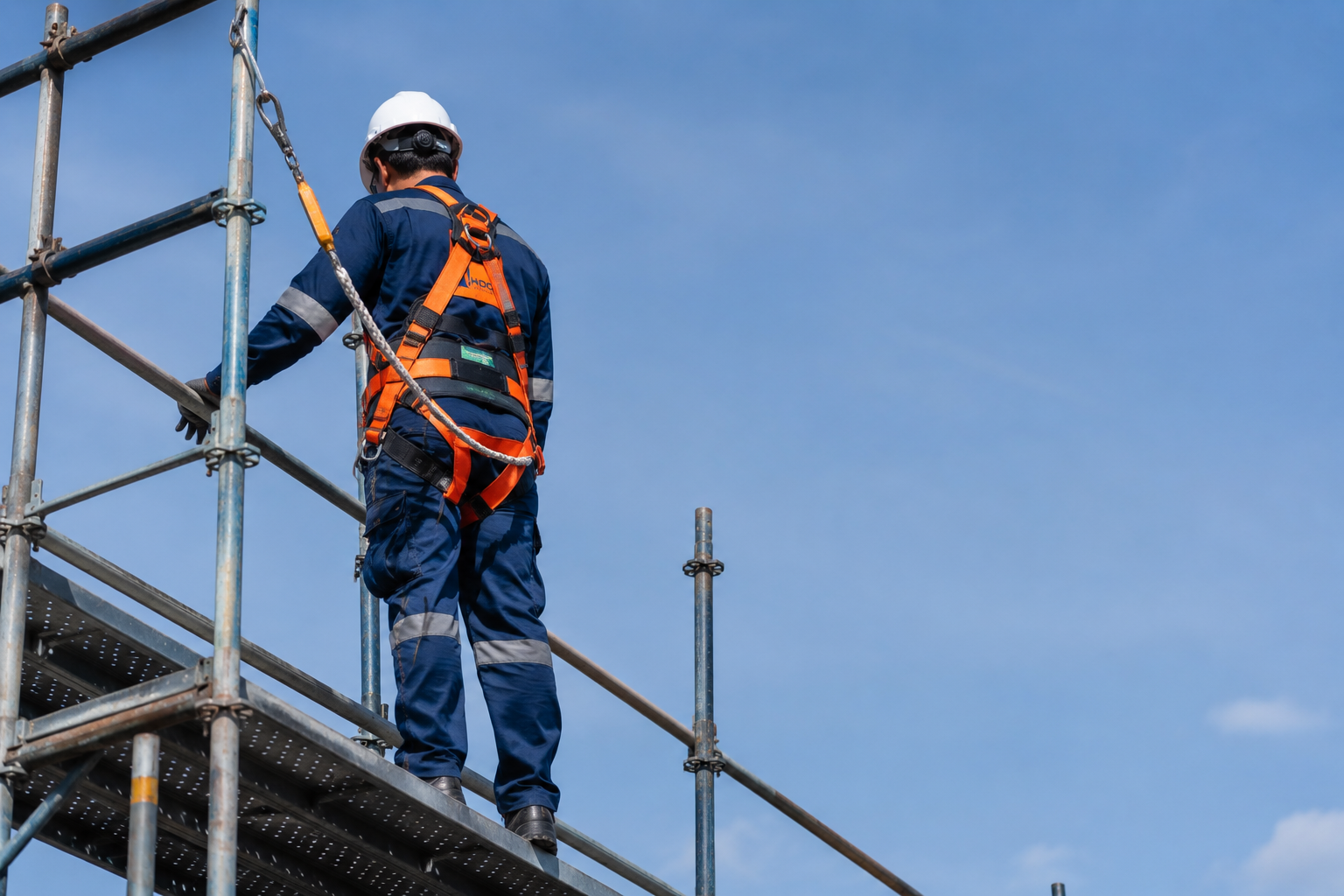
Working at Heights
Course Overview
Gain the knowledge and practical skills to work safely at elevation and comply with workplace safety regulations. Covers hazard control, equipment, and rescue planning.
Learning Outcomes
- Identify and control hazards associated with working at heights
- Select, inspect, and use fall protection equipment correctly
- Apply safe work procedures and emergency rescue planning
Duration: 1 day
Target Audience: Field workers, supervisors, and site personnel
Course Outline
- Working at heights regulations and responsibilities
- Hazard identification and risk assessment
- Fall protection systems and equipment inspection
- Safe use of ladders, scaffolds, and access equipment
- Emergency procedures and rescue planning
Working at Heights is a safety awareness course designed to help participants understand the hazards, planning requirements, equipment, and controls associated with work where a person could fall and be injured. The programme is suitable for workers, supervisors, maintenance personnel, contractors, safety committee members, and managers involved in elevated work. It emphasizes that falls can occur from roofs, ladders, scaffolds, platforms, openings, vehicles, structures, and even relatively low heights.
Participants learn the importance of avoiding work at height where reasonably practicable and applying a hierarchy of controls. The course discusses permanent access, guardrails, working platforms, scaffolding, mobile elevating work platforms, fall restraint, fall arrest, ladders, and administrative controls. Learners are encouraged to select the safest method based on the task, duration, location, frequency, and rescue requirements rather than convenience alone.
The programme covers basic inspection and safe-use principles for common equipment. Topics may include ladder angle, securing, three-point contact, platform condition, scaffold tags, edge protection, anchor points, harness fit, lanyards, connectors, and equipment storage. Participants learn why fall-arrest equipment requires suitable anchorage, adequate clearance, compatibility, inspection, and a rescue plan. Wearing a harness without these supporting controls does not automatically make the work safe.
Planning topics include permits, HIRARC, weather, dropped objects, exclusion zones, fragile surfaces, roof openings, nearby electrical hazards, access, supervision, and emergency arrangements. The course also addresses suspension trauma and the need for prompt rescue after a fall has been arrested.
By the end of the course, participants should be able to recognize work-at-height hazards, select more appropriate controls, inspect basic equipment, and understand the importance of planning and rescue. The course provides awareness and theoretical knowledge; practical authorization for specific equipment may require additional hands-on training and assessment.
For effective implementation, organizations should connect the Working at Heights programme to their own procedures, roles, examples, and performance expectations. Supervisors can reinforce the learning through follow-up discussions, workplace observation, coaching, and practical assignments. Participants should be encouraged to apply one or two specific improvements after the session and review the results with their manager. This follow-through helps convert course knowledge into consistent workplace behaviour and measurable operational improvement.